Truyện Phật Giáo - Đại Tạng Kinh - Buddhasutra.net - Download - Nghe Mp3 - Pháp Âm Mp3 - Pháp Âm Tịnh Độ - Chinese Buddhism - Tripitaka Koreana - Taishō Tripiṭaka - Tibet Tipiṭaka - Pāḷi Tipiṭaka - Qianlong Tripitaka - 乾隆大藏經 - Tipiṭaka (Pāli), Tripiṭaka (Sanskrit: त्रिपिटक) - Kinh Nikaya mp3 1 - Kinh Nikaya mp3 2 - Video Pháp Âm 1 - Video Pháp Âm 2 - Chùa Khai Nguyên - Phật Sự Tản Viên - Phật Sự Thủ Đô - In Kinh Sách Tản Viên - Tìm mua sách in
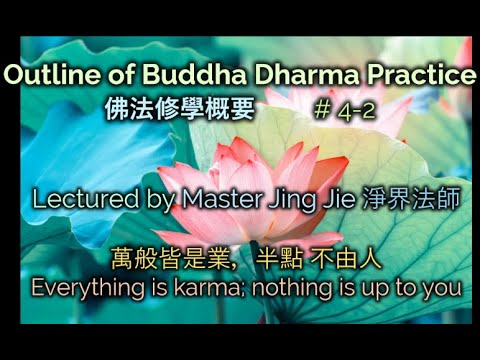
Dharma Outline????4 -2 Everything is karma; nothing is up to you
Click Here View Media Share File, Moves, Music, Photo...
Đại Nguyện
Nguyện 18 trong 48 Đại Nguyện của Phật A Di Đà :
Nếu con được thành Phật, mà chúng sanh trong mười phương dốc lòng tin tưởng, muốn sanh về cõi nước con chỉ trong mười niệm, nếu không được toại nguyện, thì con chẳng trụ ở Ngôi Chánh Giác, trừ kẻ phạm năm tội nghịch và gièm chê Chánh Pháp.
Nam Mô Pháp Giới Tạng Thân A Di Đà Phật
Lời Khuyên Tịnh Độ (Ấn Quang Đại Sư)
“ Ấn Quang từ Tây qua Ðông, từ Bắc xuống Nam, qua lại hơn vạn dặm, gặp gỡ nhiều người. Trong số đó, lắm kẻ bình nhật tự vỗ ngực là bậc thông Tông, thông Giáo, coi Tịnh Ðộ như uế vật, chỉ sợ nó làm bẩn lây đến mình. Lúc lâm chung, đa số chân loạn tay cuống, kêu cha gào mẹ. Trong số ấy, có những người trì giới niệm Phật già giặn, chắc thật, dù Tín Nguyện chưa đến mức cùng cực, tướng lành chẳng hiện, nhưng đều an nhiên mạng chung. Vì sao như vậy? Là vì tâm thuỷ trong lặng, do phân biệt nên xao động, đục ngầu, sóng thức trào dâng. Do Phật hiệu nên tâm thuỷ ngưng lặng. Bởi thế, kẻ thượng trí chẳng bằng kẻ hạ ngu, biến quá khéo thành vụng về lớn vậy!”
Published
(English Subtitles) 佛法修學概要, 萬般皆是業,半點不由人, Lectured by Master Jìng Jiè (淨界法師) from Taiwan.
Subtitles:
【58】Buddhism can break wrong views and help us reform our lives
The second is to break wrong views.
/* 4 merits of preaching the Dharma, 1. tame afflictions 2. break wrong views, reveal wisdom, achieve blessings */
Afflictions are relatively coarse, while wrong views are relatively subtle. There are two steps to eliminate evil views:
First, the wrong view of the heretics is mainly the doctrine of no causality. Life has no causality, and when a person dies, it is like a lamp being extinguished. This is the first type.
The second type of wrong view about causality, which believes that there is an almighty god who can control us and grant us happiness. That is a wrong view. These are seeking methods outside the mind, which is a rather crude wrong view.
The second is a more subtle form of wrong view. All desires have a pit, which create afflictions. All afflictions have a central point, which we briefly discussed in the last class, namely self-awareness.
1:00
At first, we subdue afflictions, but gradually, at a deeper level, we challenge our self-awareness. This is a matter of life and death.
When we first began to cultivate virtue, we had a self, thinking that “I” am the one who created the good karma, and that in the next life, it's also “me” who will enjoy the joyful fruit. This is how we thought at the beginning, and this is called the path of peace and happiness.
But this thinking is wrong because there is no unchanging "I". The "I" must be constant and in control. It cannot be changing, but in fact our mind keeps changing. You see, your childhood dreams and aspirations are different from what they are now. From the perspective of a clear mind, it is now very difficult to find the mentality you had as a child, it no longer exists. Therefore, all matters arise due to cause and condition, and because your mind is constantly changing, and nothing is permanent.
2:00
You were different when you were a child, and you will be even more different in your next life. See, you were a man in your previous life, and you had the mentality of a man. Now you are a woman, and you have the mentality of a woman, how can they be the same? When you were a king, you were so proud and arrogant. When you became a mouse, you were so self-abased that you fled when you saw people. Therefore, in the cycle of life, your mind keeps changing! You will create the mentality according to the position where you stand. How can you have something constant?
Buddhism says that the mind is like flowing water. We are living in a dynamic world. In fact, there is no present in life. You say that I am very happy now, but in fact, the happiness you describe is just an explanation of the previous thought. You are describing the previous thought.
3:00
There is no such word as "now" in life. When you talk about "now", it has already become the past. How can there be things that cannot be changed? So, first of all, it has no immutability, and more importantly, it has no dominance. This is the biggest blind spot of all people with great fortune. Because we accumulate good karma, we have a certain freedom. You say: I have control over my life. If I want to buy a TV, I can go and buy one. If I want to buy a house, I can buy one. That's my control. Everyone! Your dominance does not originate from the “I”, it is because you have good karma. Try to enjoy all your blessings and you will find that you won’t be able to drink even a bowl of porridge. We have freedom now because we have the support of good karma, but we think it is "I" who is supporting us. This is a wrong view.
4:00
When you have good karma, you are in control, but fortune is fickle. Once your good fortune runs out, things will be different. Therefore, there is nothing unchanging and nothing that dominates life. Each of us is subject to the cycle of karma. Though you have great blessings in this life, you become indulgent without learning Buddhism. After you become indulgent and exhaust your blessings, you will end up living in a slum in the next life. It doesn’t matter if you have little blessings in this life, you can just volunteer. Master Chan Yun encourages us to clean the toilets. It is best if no one knows about it. When others are resting, you can sneak over to clean the toilets. After cleaning, just sneak back without letting anyone know your good deed. He encouraged all students, who are keeping precepts, to sneak off to clean the toilets during lunch break.
5:00
It's said this was very helpful in accumulating merit and blessing. Therefore, if you cultivate blessing in this life, you will live at ease in your next life.
Of course, this blessing is not ultimate, but at least we can know that we actually have no way to control our lives, and we are helpless when we come to this world. “Everything is karma, and nothing is up to us.” Each of us is subject to karma.
Subtitles:
【58】Buddhism can break wrong views and help us reform our lives
The second is to break wrong views.
/* 4 merits of preaching the Dharma, 1. tame afflictions 2. break wrong views, reveal wisdom, achieve blessings */
Afflictions are relatively coarse, while wrong views are relatively subtle. There are two steps to eliminate evil views:
First, the wrong view of the heretics is mainly the doctrine of no causality. Life has no causality, and when a person dies, it is like a lamp being extinguished. This is the first type.
The second type of wrong view about causality, which believes that there is an almighty god who can control us and grant us happiness. That is a wrong view. These are seeking methods outside the mind, which is a rather crude wrong view.
The second is a more subtle form of wrong view. All desires have a pit, which create afflictions. All afflictions have a central point, which we briefly discussed in the last class, namely self-awareness.
1:00
At first, we subdue afflictions, but gradually, at a deeper level, we challenge our self-awareness. This is a matter of life and death.
When we first began to cultivate virtue, we had a self, thinking that “I” am the one who created the good karma, and that in the next life, it's also “me” who will enjoy the joyful fruit. This is how we thought at the beginning, and this is called the path of peace and happiness.
But this thinking is wrong because there is no unchanging "I". The "I" must be constant and in control. It cannot be changing, but in fact our mind keeps changing. You see, your childhood dreams and aspirations are different from what they are now. From the perspective of a clear mind, it is now very difficult to find the mentality you had as a child, it no longer exists. Therefore, all matters arise due to cause and condition, and because your mind is constantly changing, and nothing is permanent.
2:00
You were different when you were a child, and you will be even more different in your next life. See, you were a man in your previous life, and you had the mentality of a man. Now you are a woman, and you have the mentality of a woman, how can they be the same? When you were a king, you were so proud and arrogant. When you became a mouse, you were so self-abased that you fled when you saw people. Therefore, in the cycle of life, your mind keeps changing! You will create the mentality according to the position where you stand. How can you have something constant?
Buddhism says that the mind is like flowing water. We are living in a dynamic world. In fact, there is no present in life. You say that I am very happy now, but in fact, the happiness you describe is just an explanation of the previous thought. You are describing the previous thought.
3:00
There is no such word as "now" in life. When you talk about "now", it has already become the past. How can there be things that cannot be changed? So, first of all, it has no immutability, and more importantly, it has no dominance. This is the biggest blind spot of all people with great fortune. Because we accumulate good karma, we have a certain freedom. You say: I have control over my life. If I want to buy a TV, I can go and buy one. If I want to buy a house, I can buy one. That's my control. Everyone! Your dominance does not originate from the “I”, it is because you have good karma. Try to enjoy all your blessings and you will find that you won’t be able to drink even a bowl of porridge. We have freedom now because we have the support of good karma, but we think it is "I" who is supporting us. This is a wrong view.
4:00
When you have good karma, you are in control, but fortune is fickle. Once your good fortune runs out, things will be different. Therefore, there is nothing unchanging and nothing that dominates life. Each of us is subject to the cycle of karma. Though you have great blessings in this life, you become indulgent without learning Buddhism. After you become indulgent and exhaust your blessings, you will end up living in a slum in the next life. It doesn’t matter if you have little blessings in this life, you can just volunteer. Master Chan Yun encourages us to clean the toilets. It is best if no one knows about it. When others are resting, you can sneak over to clean the toilets. After cleaning, just sneak back without letting anyone know your good deed. He encouraged all students, who are keeping precepts, to sneak off to clean the toilets during lunch break.
5:00
It's said this was very helpful in accumulating merit and blessing. Therefore, if you cultivate blessing in this life, you will live at ease in your next life.
Of course, this blessing is not ultimate, but at least we can know that we actually have no way to control our lives, and we are helpless when we come to this world. “Everything is karma, and nothing is up to us.” Each of us is subject to karma.
Up Next
Autoplay
-
11:47

????Understand karma, stop evil and do good, this is the basic skill of Buddhism, Dharma Outline 3-3
-
14:21
Dharma Outline????7-2 Good karma bring you joy, but mindsets determine your rise and fall in 6 real
-
11:01
Dharma Outline????4-4 Cultivation is your own business. No one can give you the Way
-
09:53
Dharma Outline????7-4 Our initial resolve is crucial in guiding our good karma
-
18:26

Tam Thiên Đại Thiên Thế Giới Trong Kinh Phật
-
1:54:49

净空法师-地藏菩萨本愿经-第四卷
-
05:37

Xin Mẹ đừng Bỏ Con Mẹ ơi ! HD
-
02:11

阿彌陀佛的乾坤袋 #淨宗法師