Truyện Phật Giáo - Đại Tạng Kinh - Download - Nghe Mp3 - Pháp Âm Mp3 - Pháp Âm Tịnh Độ - Chinese Buddhism - Tripitaka Koreana - Taishō Tripiṭaka - Tibet Tipiṭaka - Pāḷi Tipiṭaka - Qianlong Tripitaka - 乾隆大藏經 - Tipiṭaka (Pāli), Tripiṭaka (Sanskrit: त्रिपिटक) - Kinh Nikaya mp3 1 - Kinh Nikaya mp3 2 - Video Pháp Âm 1 - Video Pháp Âm 2 - Chùa Khai Nguyên - Phật Sự Tản Viên - Phật Sự Thủ Đô - In Kinh Sách Tản Viên
Gnosis - Om Mani Padme Hum
Đại Nguyện
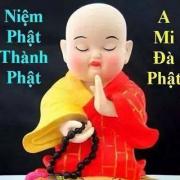
Nguyện 18 trong 48 Đại Nguyện của Phật A Di Đà :
Nếu con được thành Phật, mà chúng sanh trong mười phương dốc lòng tin tưởng, muốn sanh về cõi nước con chỉ trong mười niệm, nếu không được toại nguyện, thì con chẳng trụ ở Ngôi Chánh Giác, trừ kẻ phạm năm tội nghịch và gièm chê Chánh Pháp.
Nam Mô Pháp Giới Tạng Thân A Di Đà Phật
Lời Khuyên Tịnh Độ (Ấn Quang Đại Sư)
“ Ấn Quang từ Tây qua Ðông, từ Bắc xuống Nam, qua lại hơn vạn dặm, gặp gỡ nhiều người. Trong số đó, lắm kẻ bình nhật tự vỗ ngực là bậc thông Tông, thông Giáo, coi Tịnh Ðộ như uế vật, chỉ sợ nó làm bẩn lây đến mình. Lúc lâm chung, đa số chân loạn tay cuống, kêu cha gào mẹ. Trong số ấy, có những người trì giới niệm Phật già giặn, chắc thật, dù Tín Nguyện chưa đến mức cùng cực, tướng lành chẳng hiện, nhưng đều an nhiên mạng chung. Vì sao như vậy? Là vì tâm thuỷ trong lặng, do phân biệt nên xao động, đục ngầu, sóng thức trào dâng. Do Phật hiệu nên tâm thuỷ ngưng lặng. Bởi thế, kẻ thượng trí chẳng bằng kẻ hạ ngu, biến quá khéo thành vụng về lớn vậy!”
Published
http://gnosislosangeles.blogspot.com/
Om Mani Padme HumThe Most Popular Mantra in Tibetan Buddhism.This is the mantra of the deity of love and compassion, Chenrezig or Avalokateshvara in the Sanskrit language.
On the meaning of: OM MANI PADME HUM
The jewel is in the lotus or praise to the jewel in the lotus
by His Holiness Tenzin Gyatso The Fourteenth Dalai Lama of Tibet
It is very good to recite the mantra OM MANI PADME HUM, but while
you are doing it, you should be thinking on its meaning, for the
meaning of the six syllables is great and vast. The first, OM, is
composed of three pure letters, A, U, and M. These symbolize the
practitioner's impure body, speech, and mind; they also symbolize the
pure exalted body, speech and mind of a Buddha.
Can impure body, speech and mind be transformed into pure body,
speech and mind, or are they entirely separate? All Buddhas are cases
of being who were like ourselves and then in dependence on the path
became enlightened; Buddhism does not assert that there is anyone who
from the beginning is free from faults and possesses all good
qualities. The development of pure body, speech, and mind comes from
gradually leaving the impure states and their being transformed into
the pure.
How is this done? The path is indicated by the next four syllables.
MANI, meaning jewel, symbolizes the factor of method- the altruistic
intention to become enlightened, compassion, and love. Just as a
jewel is capable of removing poverty, so the altruistic mind of
enlightenment is capable of removing the poverty, or difficulties, of
cyclic existence and of solitary peace. Similarly, just as a jewel
fulfills the wishes of sentient beings, so the altruistic intention to
become enlightened fulfills the wishes of sentient beings.
The two syllables, PADME, meaning lotus, symbolize wisdom. Just as
a lotus grows forth from mud but is not sullied by the faults of mud,
so wisdom is capable of putting you in a situation of non-
contradiction where as there would be contradiction if you did not
have wisdom. There is wisdom realizing impermanence, wisdom realizing
that persons are empty of self-sufficient or substantial existence,
wisdom that realizes the emptiness of duality (that is to say, of
difference of entity between subject and object), and wisdom that
realizes the emptiness of inherent existence. Though there are may
different types of wisdom, the main of all these is the wisdom
realizing emptiness.
Purity must be achieved by an indivisible unity of method and
wisdom, symbolized by the final syllable, HUM, which indicates
indivisibility. According to the sutra system, this indivisibility of
method and wisdom refers to one consciousness in which there is a full
form of both wisdom affected by method and method affected by wisdom.
In the mantra, or tantra vehicle, it refers to one conciousness in
which there is the full form of both wisdom and method as one
undifferentiable entity. In terms of the seed syllables of the five
conqueror Buddhas, HUM is the is the seed syllable of Akshobhya- the
immovable, the unfluctuating, that which cannot be disturbed by
anything.
Thus the six syllables, OM MANI PADME HUM, mean that in dependence
on the practice which is in indivisible union of method and wisdom,
you can transform your impure body, speech and mind into the pure
body, speech, and mind of a Buddha. It is said that you should not
seek for Buddhahood outside of yourself; the substances for the
achievement of Buddhahood are within. As Maitreya says in his SUBLIME
CONTINUUM OF GREAT VEHICLE (UTTARA TANTRA) all beings naturally have
the Buddha nature in their own continuum. We have within us the seed
of purity, the essence of a One Gone Thus (TATHAGATAGARBHA), that is
to be transformed and full developed into Buddhahood.
(From a lecture given by His Holiness The Dalai Lama of Tibet at the
Kalmuck Mongolian Buddhist Center, New Jersey.)
Om Mani Padme HumThe Most Popular Mantra in Tibetan Buddhism.This is the mantra of the deity of love and compassion, Chenrezig or Avalokateshvara in the Sanskrit language.
On the meaning of: OM MANI PADME HUM
The jewel is in the lotus or praise to the jewel in the lotus
by His Holiness Tenzin Gyatso The Fourteenth Dalai Lama of Tibet
It is very good to recite the mantra OM MANI PADME HUM, but while
you are doing it, you should be thinking on its meaning, for the
meaning of the six syllables is great and vast. The first, OM, is
composed of three pure letters, A, U, and M. These symbolize the
practitioner's impure body, speech, and mind; they also symbolize the
pure exalted body, speech and mind of a Buddha.
Can impure body, speech and mind be transformed into pure body,
speech and mind, or are they entirely separate? All Buddhas are cases
of being who were like ourselves and then in dependence on the path
became enlightened; Buddhism does not assert that there is anyone who
from the beginning is free from faults and possesses all good
qualities. The development of pure body, speech, and mind comes from
gradually leaving the impure states and their being transformed into
the pure.
How is this done? The path is indicated by the next four syllables.
MANI, meaning jewel, symbolizes the factor of method- the altruistic
intention to become enlightened, compassion, and love. Just as a
jewel is capable of removing poverty, so the altruistic mind of
enlightenment is capable of removing the poverty, or difficulties, of
cyclic existence and of solitary peace. Similarly, just as a jewel
fulfills the wishes of sentient beings, so the altruistic intention to
become enlightened fulfills the wishes of sentient beings.
The two syllables, PADME, meaning lotus, symbolize wisdom. Just as
a lotus grows forth from mud but is not sullied by the faults of mud,
so wisdom is capable of putting you in a situation of non-
contradiction where as there would be contradiction if you did not
have wisdom. There is wisdom realizing impermanence, wisdom realizing
that persons are empty of self-sufficient or substantial existence,
wisdom that realizes the emptiness of duality (that is to say, of
difference of entity between subject and object), and wisdom that
realizes the emptiness of inherent existence. Though there are may
different types of wisdom, the main of all these is the wisdom
realizing emptiness.
Purity must be achieved by an indivisible unity of method and
wisdom, symbolized by the final syllable, HUM, which indicates
indivisibility. According to the sutra system, this indivisibility of
method and wisdom refers to one consciousness in which there is a full
form of both wisdom affected by method and method affected by wisdom.
In the mantra, or tantra vehicle, it refers to one conciousness in
which there is the full form of both wisdom and method as one
undifferentiable entity. In terms of the seed syllables of the five
conqueror Buddhas, HUM is the is the seed syllable of Akshobhya- the
immovable, the unfluctuating, that which cannot be disturbed by
anything.
Thus the six syllables, OM MANI PADME HUM, mean that in dependence
on the practice which is in indivisible union of method and wisdom,
you can transform your impure body, speech and mind into the pure
body, speech, and mind of a Buddha. It is said that you should not
seek for Buddhahood outside of yourself; the substances for the
achievement of Buddhahood are within. As Maitreya says in his SUBLIME
CONTINUUM OF GREAT VEHICLE (UTTARA TANTRA) all beings naturally have
the Buddha nature in their own continuum. We have within us the seed
of purity, the essence of a One Gone Thus (TATHAGATAGARBHA), that is
to be transformed and full developed into Buddhahood.
(From a lecture given by His Holiness The Dalai Lama of Tibet at the
Kalmuck Mongolian Buddhist Center, New Jersey.)
- Category
- Mantra - Trì Tụng Mật Chú
Up Next
Autoplay
-
58:08

六字大明咒 嗡嘛呢叭咪吽 | 1080遍 童聲 | Om Mani Padme Hum | :迴向法界一切眾生:淨化身心 消除障礙 脫離輪迴| Kid Chant Om Mani Padme Hum
-
22:49
【Buddhist Song】Om Mani Padme Hum |六字大明咒, 觀世心咒 嗡瑪尼唄美吽 | the best Om Mani Padme Hum
-
01:04
Gnosis Om Mani Pad Me Hum Samael
-
02:18
【Om Mani Padme Hum】 六字大明咒的秘密, Secrets of Om Mani Padme Hum, 嗡瑪尼唄美吽 意思? Om Mani Padme Hum meaning
-
18:26

Tam Thiên Đại Thiên Thế Giới Trong Kinh Phật
-
1:54:49

净空法师-地藏菩萨本愿经-第四卷
-
05:37

Xin Mẹ đừng Bỏ Con Mẹ ơi ! HD
-
02:11

阿彌陀佛的乾坤袋 #淨宗法師


↑ Quét mã QRcode trên zalo hoặc phần mềm scan QRcode để đọc link truy cập vào ứng dụng Phật Pháp để cài đặt trên thiết bị di động của bạn:
